🌐 1. online safety
THINK. CHECK. STAY SAFE.
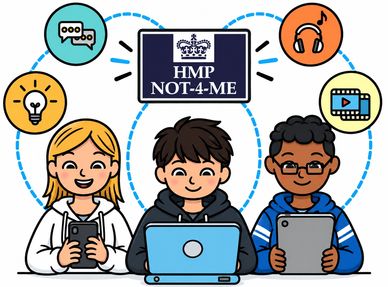
The internet is brilliant for gaming, friends, videos and learning.
But not everyone online is who they say they are.
GROOMING & INDECENT IMAGES
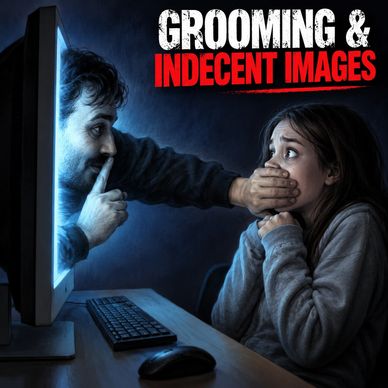
🚩 WARNING SIGNS
🤫 They ask you to keep secrets
🎁 They offer gifts or money
📸 They ask for private pictures
📱 They want to move to another app
📍 They ask to meet you
🧠 TRUST YOUR INSTINCTS
Something doesn't feel right?
Stop. Block them. Tell someone.
⚖️ KNOW THE LAW
Sexual or indecent images involving anyone under 18 can be a criminal offence.
Once you send an image, you lose control of it.
🛡️ STAY SAFE
Don't send it. Don't meet them. Tell someone you trust.
GAMING & ONLINE SCAMS
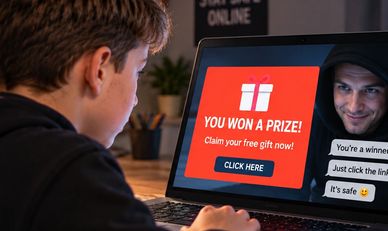
🚩 WARNING SIGNS
🎁 Too-good-to-be-true offers
🔗 Strange links
🔑 Someone asking for your password
💳 Requests for money
👤 Fake accounts
🧠 TRUST YOUR INSTINCTS
If it feels suspicious, don't click.
Stop. Check. Block. Report.
⚖️ KNOW THE LAW
Scamming, theft and using someone else's information can be criminal offences.
🛡️ STAY SAFE
🔒 Keep accounts private
🔑 Protect your passwords
🔗 Check links before clicking
🚫 Block & report suspicious accounts
CYBERBULLYING
CYBERBULLYING
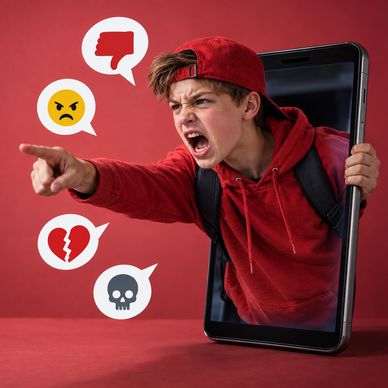
🚩 WARNING SIGNS
❌ Threats
❌ Abusive messages
❌ Fake accounts
❌ Rumours
❌ Embarrassing photos or videos
🧠 TRUST YOUR INSTINCTS
If someone is making you feel scared, upset or uncomfortable — speak up.
You don't have to deal with it alone.
⚖️ KNOW THE LAW
Threats, harassment and some forms of sharing intimate images without consent can be criminal offences.
🛡️ STAY SAFE
Block. Report. Save the evidence. Tell someone you trust.
NEED HELP?
CYBERBULLYING
NEED HELP?
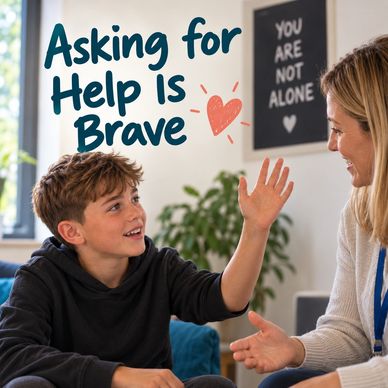
📞 NEED HELP?
🚩 WARNING SIGNS
Someone online is:
Pressuring you • Threatening you • Asking for pictures • Trying to meet you
🧠 TRUST YOUR INSTINCTS
If something doesn't feel right, it probably isn't.
⚖️ KNOW THE LAW
Online actions can have real-world consequences.
🛡️ STAY SAFE
Tell a parent, carer, teacher, youth worker or trusted adult.
Worried about online grooming or sexual abuse?
🛡️ REPORT TO CEOP
Immediate danger? Call 999.
REMEMBER
CYBERBULLYING
NEED HELP?
💭 REMEMBER
THE INTERNET NEVER FORGETS.
THINK. CHECK. STAY SAFE.
Not everyone online is who they say they are.
🚨 2. ANTI SOCIAL BEHAVIOUR (ASB)
THINK BEFORE YOU ACT
GRAFFITI & CRIMINAL DAMAGE
GRAFFITI & CRIMINAL DAMAGE
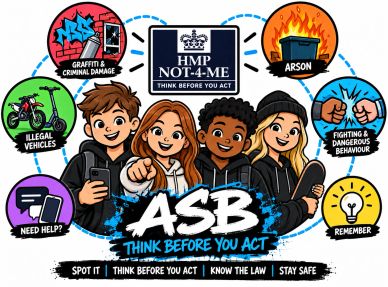
ASB can upset, frighten or harm other people.
What might seem like a bit of fun can have serious consequences.
📹 Remember: CCTV, phones, doorbells and body-worn cameras can capture what happens.
GRAFFITI & CRIMINAL DAMAGE
GRAFFITI & CRIMINAL DAMAGE
GRAFFITI & CRIMINAL DAMAGE
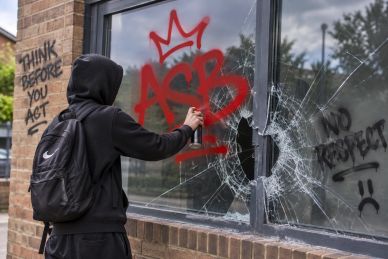
🚨 SPOT IT
🎨 Graffiti
🪟 Broken windows
🚌 Damaged bus shelters
🚗 Damaged cars
🍾 Smashed bottles
🧠 THINK BEFORE YOU ACT
Think it's only a bit of fun?
Who has to pay for the damage?
Could you be the one facing the consequences?
⚖️ KNOW THE LAW
Deliberately damaging someone else's property can be a criminal offence.
You could face arrest, a fine or court action.
🛡️ STAY SAFE
Don't damage it. Don't join in. Walk away.
ARSON
GRAFFITI & CRIMINAL DAMAGE
ILLEGAL VEHICLES
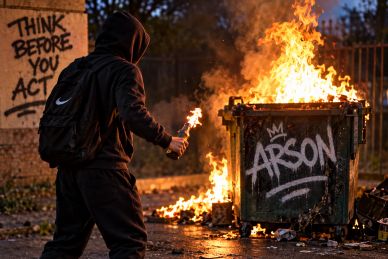
🚨 SPOT IT
🔥 Fires in bins
🔥 Burning grass or woodland
🔥 Fires near buildings
🔥 Fires involving vehicles
🧠 THINK BEFORE YOU ACT
Fire can spread faster than you think.
A small fire can quickly put people, homes and lives at risk.
⚖️ KNOW THE LAW
Deliberately setting a fire can be a serious criminal offence.
Some arson offences carry a maximum penalty of life imprisonment where the law allows.
📋 Arson Can stay on your DBS for LIFE
🛡️ STAY SAFE
Don't start fires. Don't encourage others. Walk away.
🚨 Fire or immediate danger? Call 999.
ILLEGAL VEHICLES
FIGHTING & DANGEROUS BEHAVIOUR
ILLEGAL VEHICLES
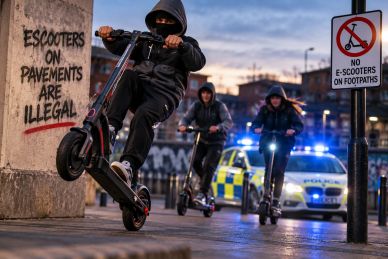
🚨 SPOT IT
🛵 Riding illegally
🏍️ Off-road bikes in public areas
🚲 Illegal or unsafe e-bikes
🛞 Quad bikes on footpaths or estates
⚠️ Dangerous riding
🧠 THINK BEFORE YOU ACT
Is getting a thrill worth putting someone at risk?
Think about yourself — and everyone around you.
⚖️ KNOW THE LAW
Privately owned e-scooters generally cannot be ridden on public roads or pavements in the UK, outside authorised rental trials.
Vehicles used illegally can be seized by police.
🛡️ STAY SAFE
Ride legally. Ride responsibly. Don't put others at risk.
FIGHTING & DANGEROUS BEHAVIOUR
FIGHTING & DANGEROUS BEHAVIOUR
FIGHTING & DANGEROUS BEHAVIOUR
🚨 SPOT IT
👊 Fighting
🪨 Throwing stones or bricks
🎆 Throwing fireworks
🚌 Throwing objects at vehicles
💥 Damaging property
🧠 THINK BEFORE YOU ACT
Walking away can take more courage than getting involved.
Don't let someone else's actions get you into trouble.
⚖️ KNOW THE LAW
Assault, criminal damage and dangerous behaviour can lead to arrest, prosecution and potentially imprisonment, depending on the offence.
🛡️ STAY SAFE
Walk away. Don't retaliate. Don't encourage others.
If someone is in danger, get help.
NEED HELP & REMEMBER
FIGHTING & DANGEROUS BEHAVIOUR
FIGHTING & DANGEROUS BEHAVIOUR
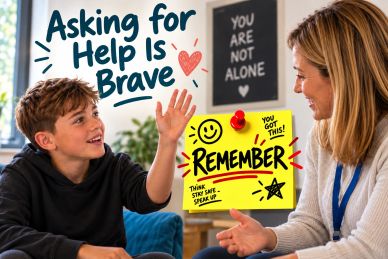
🚨 FEELING PRESSURED?
Someone is:
Pressuring you • Threatening you • Asking you to join in • Getting you involved in crime
🧠 THINK BEFORE YOU ACT
You don't have to prove anything to your friends.
Walking away is always an option.
⚖️ KNOW THE LAW
You are responsible for your own actions, even if someone else encouraged you.
🛡️ STAY SAFE
Talk to someone you trust.
👨👩👧 Parent or carer
👩🏫 Teacher
🧑🏫 Youth worker
👮 Police
🛡️ FEARLESS
Fearless provides free and confidential support for young people who want to pass on information about crime.
💭 REMEMBER
THINK BEFORE YOU ACT.
STOP • THINK • WALK AWAY
A few minutes of "fun" could have consequences for years.
🚨 3. EXPLOITATION
THINK BEFORE YOU ACT
GRAFFITI & CRIMINAL DAMAGE
GRAFFITI & CRIMINAL DAMAGE
🚨 SPOT IT
💰 Offers of easy money
🎁 Expensive gifts or rewards
🤫 Being told to keep secrets
💊 Drugs or alcohol
🏠 Offers of somewhere to stay
👥 Pressure to carry something
📱 Someone building trust online
🚗 Someone trying to isolate you or meet you alone
🧠 THINK BEFORE YOU ACT
Is someone really your friend if they expect something dangerous or harmful in return?
Someone may make you feel special, give you things or offer you money to gain your trust.
Real friends don't use you.
⚖️ KNOW THE LAW
Exploitation can involve serious criminal offences, including drug supply, violence, sexual offences or encouraging someone to commit crime.
Being told to do something by someone else doesn't automatically mean you won't be responsible for your actions.
🛡️ STAY SAFE
If something doesn't feel right, step away and tell someone you trust.
GRAFFITI & CRIMINAL DAMAGE
GRAFFITI & CRIMINAL DAMAGE
GRAFFITI & CRIMINAL DAMAGE
ARSON
GRAFFITI & CRIMINAL DAMAGE
ILLEGAL VEHICLES
ILLEGAL VEHICLES
FIGHTING & DANGEROUS BEHAVIOUR
ILLEGAL VEHICLES
FIGHTING & DANGEROUS BEHAVIOUR
FIGHTING & DANGEROUS BEHAVIOUR
FIGHTING & DANGEROUS BEHAVIOUR
🚨 SPOT IT
👊 Fighting
🪨 Throwing stones or bricks
🎆 Throwing fireworks
🚌 Throwing objects at vehicles
💥 Damaging property
🧠 THINK BEFORE YOU ACT
Walking away can take more courage than getting involved.
Don't let someone else's actions get you into trouble.
⚖️ KNOW THE LAW
Assault, criminal damage and dangerous behaviour can lead to arrest, prosecution and potentially imprisonment, depending on the offence.
🛡️ STAY SAFE
Walk away. Don't retaliate. Don't encourage others.
If someone is in danger, get help.
NEED HELP & REMEMBER
FIGHTING & DANGEROUS BEHAVIOUR
FIGHTING & DANGEROUS BEHAVIOUR
🚨 FEELING PRESSURED?
Someone is:
Pressuring you • Threatening you • Asking you to join in • Getting you involved in crime
🧠 THINK BEFORE YOU ACT
You don't have to prove anything to your friends.
Walking away is always an option.
⚖️ KNOW THE LAW
You are responsible for your own actions, even if someone else encouraged you.
🛡️ STAY SAFE
Talk to someone you trust.
👨👩👧 Parent or carer
👩🏫 Teacher
🧑🏫 Youth worker
👮 Police
🛡️ FEARLESS
Fearless provides free and confidential support for young people who want to pass on information about crime.
💭 REMEMBER
THINK BEFORE YOU ACT.
STOP • THINK • WALK AWAY
A few minutes of "fun" could have consequences for years.